
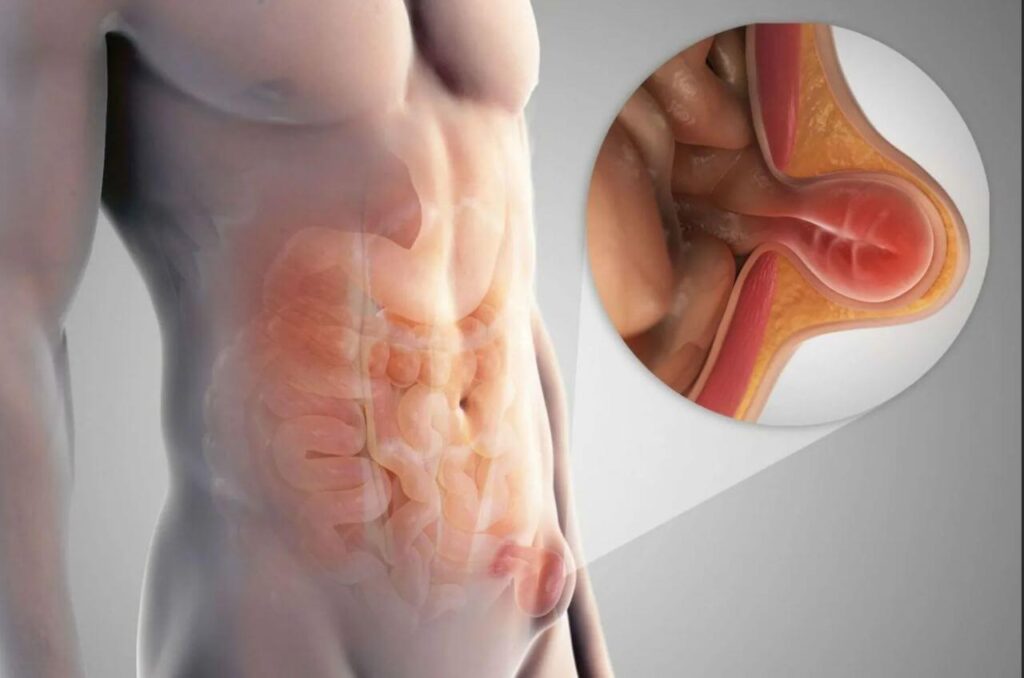
Hernia is a common condition that affects millions of people across the world. It occurs when an internal organ or tissue protrudes through a weakened area of muscle or surrounding tissue wall. While surgical repair is the most definitive and permanent treatment, many individuals often seek alternative or non-surgical ways to manage this condition. Whether it’s due to medical concerns, personal fears, financial reasons, or waiting for the right time to go for surgery, patients frequently search online for how to treat hernia without surgery.
But is it truly possible to avoid surgery for a hernia? Can we treat hernia without surgery safely? Let’s explore the facts, options, limitations, and safe practices for managing hernia conservatively.
Types of Hernia and Why They Matter
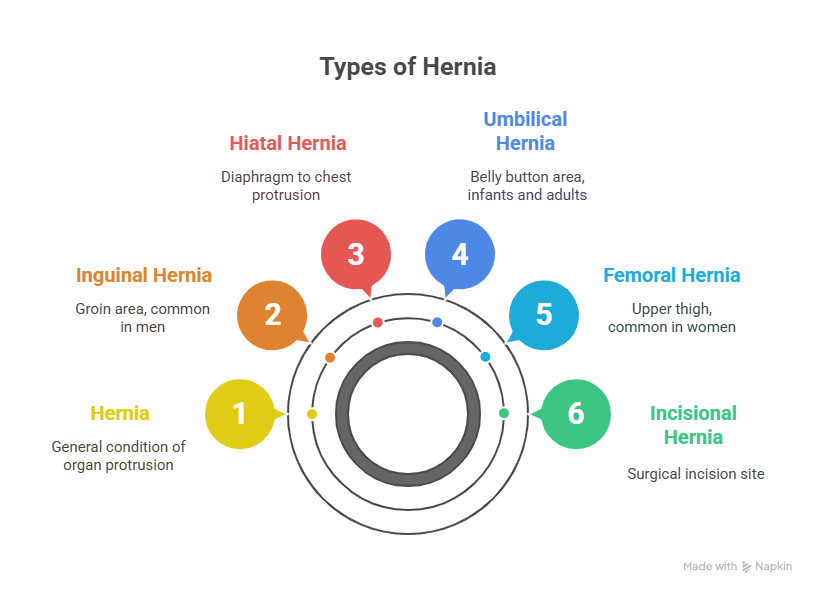
Before diving into non-surgical solutions, it’s important to understand that not all hernias are the same. The approach may differ depending on the type, location, and severity of the hernia. Here are the common types:
- Inguinal Hernia – Occurs in the groin area and is most common in men.
- Hiatal Hernia – Occurs when the upper part of the stomach pushes through the diaphragm into the chest.
- Umbilical Hernia – Appears near the belly button, especially in infants and overweight adults.
- Femoral Hernia – Occurs near the upper thigh, more common in women.
- Incisional Hernia – Develops at the site of a previous surgical incision.
Depending on the type and size of hernia, doctors may sometimes recommend a watchful waiting approach if symptoms are mild. But in most cases, surgery remains the only way to truly repair the underlying defect. However, there are several non-surgical strategies to manage hernia symptoms and potentially delay or avoid surgery safely under supervision.
Can Hernia Be Treated Without Surgery?
Let’s answer the most searched question: Can hernia be treated without surgery?
Medically speaking, no non-surgical option can close the defect or heal the opening in the muscle wall. However, that does not mean patients are without options. Conservative treatments can help relieve symptoms, improve quality of life, and minimize risk—especially in cases where surgery is risky or temporarily unadvisable.
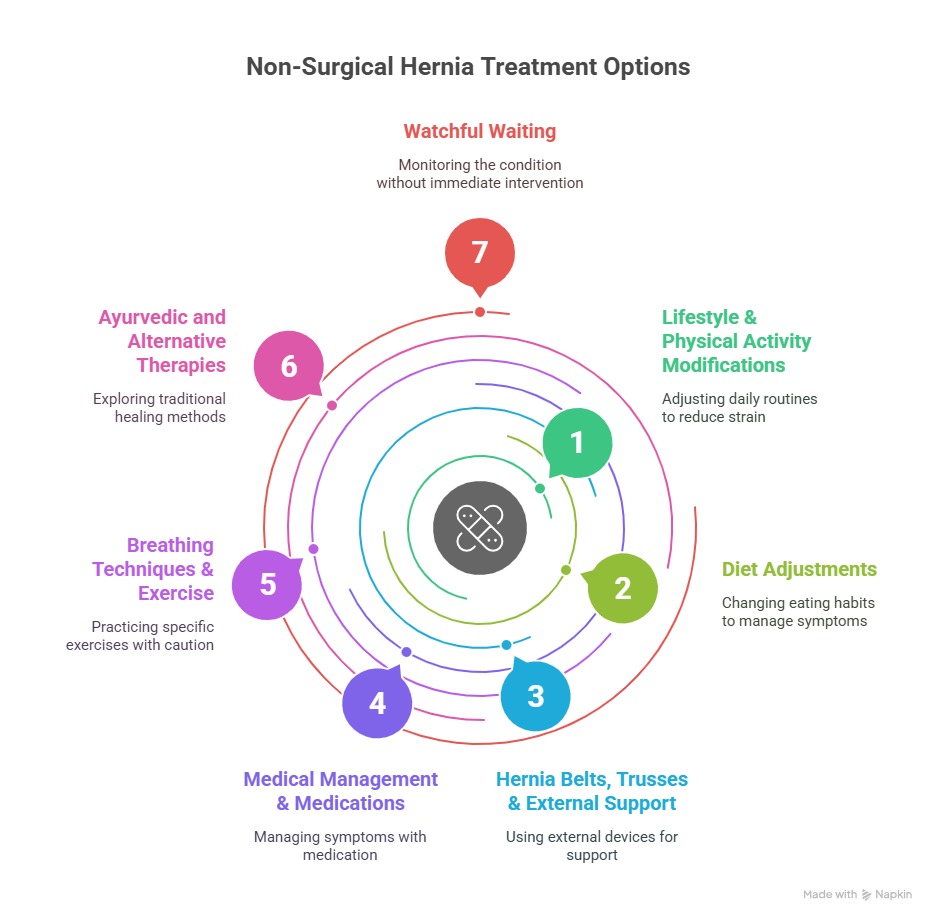
If you’re looking for how to treat inguinal hernia without surgery or how to treat hiatal hernia without surgery, here’s what you can consider:
1. Lifestyle & Physical Activity Modifications
Adjusting daily activities is a cornerstone of managing hernia symptoms. For most hernia types, pressure on the abdominal wall worsens the protrusion. Therefore:
- Avoid lifting heavy weights or sudden bending.
- Use ergonomic body movements, especially when working or exercising.
- Take frequent breaks and avoid prolonged standing or coughing without support.
- Quit smoking, as it weakens tissue and induces chronic coughing, which can worsen hernia.
These steps are simple yet crucial if you’re looking for how to treat hernia without surgery.
2. Diet Adjustments (Especially for Hiatal Hernia)
Hiatal hernia causes acid reflux, chest discomfort, and sometimes breathing difficulties. Dietary choices can play a key role in managing these symptoms:
- Eat small, frequent meals.
- Avoid lying down immediately after eating.
- Elevate the head of your bed.
- Avoid caffeine, spicy foods, tomatoes, citrus fruits, chocolate, and alcohol.
- Incorporate alkaline foods like bananas, oats, green vegetables.
This is especially helpful for those who ask how to treat hiatal hernia without surgery. While it won’t cure the hernia, it can significantly reduce discomfort.
Experience Advanced Hernia Surgery With Dr. Pawanindra Lal!
Book An Appointment3. Hernia Belts, Trusses & External Support
Inguinal and umbilical hernias often benefit from the use of a hernia belt or truss. These are external support devices that hold the protruding tissue in place temporarily and provide relief from the pressure or bulging.
However, these belts should be used only with medical guidance. Overuse without supervision can cause muscle weakening or masking of complications. If you’re exploring how to treat inguinal hernia without surgery, using the right belt fitted by a hernia surgeon in Delhi or your city is critical.
4. Medical Management & Medications
For hiatal hernias, medical treatment focuses on controlling acid reflux and inflammation:
- Antacids to neutralize stomach acid.
- Proton Pump Inhibitors (PPIs) like omeprazole to reduce acid production.
- H2 Blockers like ranitidine for long-term symptom control.
While these won’t reverse the hernia, they can relieve symptoms for years in some patients and reduce damage to the esophagus lining.
5. Breathing Techniques & Exercise (With Caution)
In some cases, gentle exercise and posture correction can reduce hernia discomfort and even improve abdominal wall tone:
- Diaphragmatic breathing (especially in hiatal hernia)
- Gentle yoga (e.g., Cat-Cow pose, Supta Baddha Konasana)
- Modified planks and pelvic tilts
- Core strengthening under physiotherapy guidance
Exercise should never strain the abdomen. Supervised programs are recommended. This is relevant for those searching “how to treat hernia without surgery” through holistic or fitness-based methods.
6. Ayurvedic and Alternative Therapies
While not medically validated, some patients explore:
- Ayurvedic herbs like ashwagandha, haritaki, triphala
- Acupressure or acupuncture
- Homeopathy remedies
- Lifestyle-based therapies like Panchakarma
Caution: These should always be supplementary and never replace expert medical advice. For best outcomes, consult both an alternative practitioner and a qualified Hernia surgeon in Delhi or your locality.
7. Watchful Waiting (Under Monitoring)
For small, asymptomatic hernias, doctors may recommend watchful waiting—especially in older patients or those with serious health conditions that make surgery risky.
This approach involves:
- Regular physical examination
- Imaging scans if needed
- Monitoring for complications (pain, redness, vomiting, etc.)
If you’re considering conservative care, this should always be done under a specialist’s supervision.
When You Should NOT Avoid Surgery
Despite many searches around how to treat hernia without surgery, it is extremely important to know when non-surgical options are no longer safe.
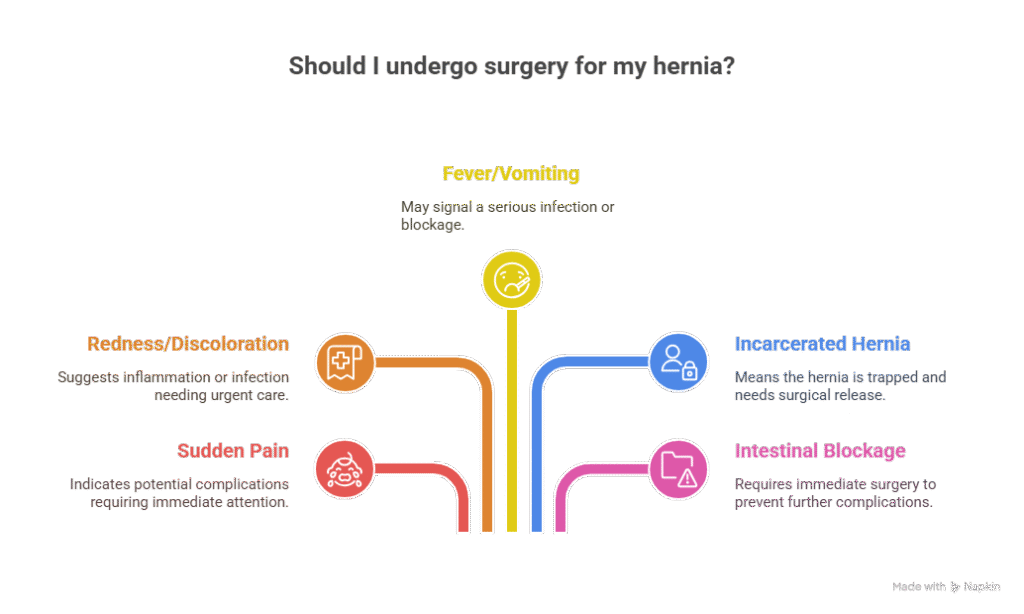
Seek immediate medical help if you notice:
- Sudden, intense pain
- Redness or discoloration over hernia bulge
- Fever, vomiting, or bloating
- Hernia that cannot be pushed back (incarcerated)
- Signs of intestinal blockage
These symptoms may indicate strangulation—a life-threatening emergency. In such cases, only surgery can save the tissue.
Final Words
Hernias are manageable and often treatable — but not to be taken lightly. Whether you’re delaying surgery due to health concerns, personal choices, or planning timing, conservative management can help improve your comfort and quality of life.
Now that you know how to treat hernia without surgery, take the next step responsibly. Consult a medical expert, stay informed, and listen to your body.
And remember, surgery — when needed — is safer and more effective today than ever before.
Frequently Asked Questions (FAQs)
1. How to treat hernia without surgery?
Hernia cannot be permanently treated without surgery, but its symptoms can be managed with lifestyle changes, weight management, dietary adjustments, hernia belts, physiotherapy, and medications. It’s essential to consult a qualified doctor or hernia surgeon in Delhi to monitor the condition and prevent complications.
2. Can we treat hernia without surgery?
Yes, in select cases. Small, asymptomatic hernias may be managed conservatively for a period of time. However, this approach should always be done under medical supervision, as hernias can worsen or become life-threatening if left untreated.
3. Can hernia be treated without surgery permanently?
No, hernias cannot be cured without surgery. Non-surgical methods can help control symptoms and prevent rapid worsening, but the actual defect in the muscle or tissue wall requires surgical repair for a permanent solution.
4. How to treat hiatal hernia without surgery?
Hiatal hernia symptoms can often be managed without surgery by making dietary changes, avoiding acidic foods, eating smaller meals, elevating the head of the bed, and using medications like PPIs or antacids. Diaphragmatic breathing exercises may also help. These methods reduce acid reflux and improve daily comfort.
5. How to treat inguinal hernia without surgery?
To manage inguinal hernia non-surgically, patients can wear supportive hernia belts or trusses, avoid heavy lifting, maintain a healthy weight, and do light physiotherapy. However, surgery is ultimately required to fix the hernia and prevent it from enlarging or becoming strangulated.